Nora Roofing Pros offers a full range of roofing services to homeowners and businesses across Indianapolis, IN — from same-day emergency repairs to complete roof replacements and scheduled maintenance. Indianapolis sits in a continental climate zone that delivers everything from summer hail and windstorms to heavy winter ice loads; every roofing system here must handle freeze-thaw cycling, seasonal humidity swings and storm damage that arrives with little warning. The sections below walk through every service we provide, how to decide which one you need, what roofing systems and materials are available, and how we help you pay for the work — including insurance claims and financing.
What roofing services does Nora Roofing Pros offer in Indianapolis?
We provide seven core roofing services in Indianapolis and the surrounding communities: Roof Repair, Roof Installation, Roof Replacement, Roof Inspection, Roof Maintenance, Commercial Roofing, and Emergency Roofing.
- Roof Repair — Fix storm damage, leaks, missing shingles, flashing failures and punctures before they spread.
- Roof Installation — Full new-roof installation on new construction or additions, including deck preparation, underlayment and chosen roofing material.
- Roof Replacement — Complete tear-off of the existing roofing system and installation of a new one, chosen for your home's structure and your budget.
- Roof Inspection — Detailed visual and physical assessment of decking, flashing, gutters, ventilation and roofing material to document condition and catch problems early.
- Roof Maintenance — Scheduled cleaning, minor repairs and system checks that extend service life and keep manufacturer guidelines met.
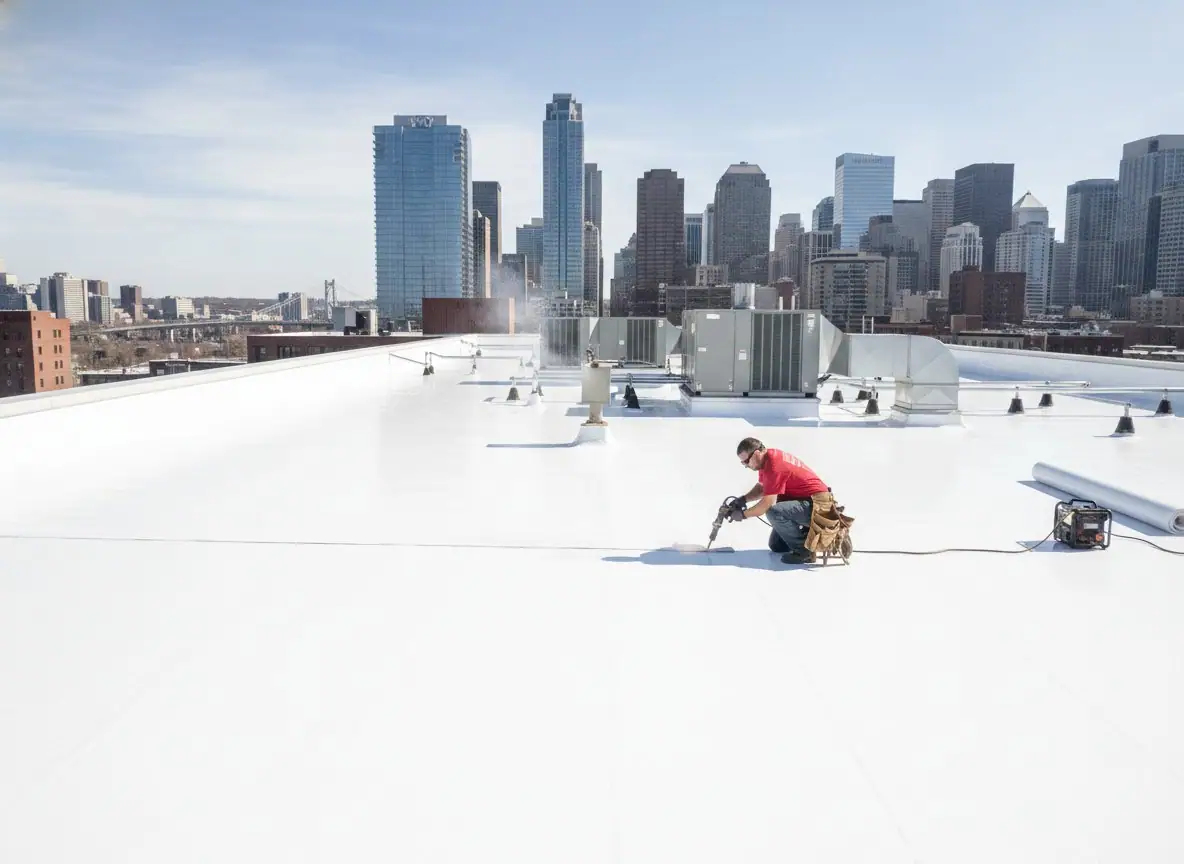
- Commercial Roofing — Low-slope and flat roofing systems for commercial and industrial buildings, including TPO, EPDM and modified bitumen.
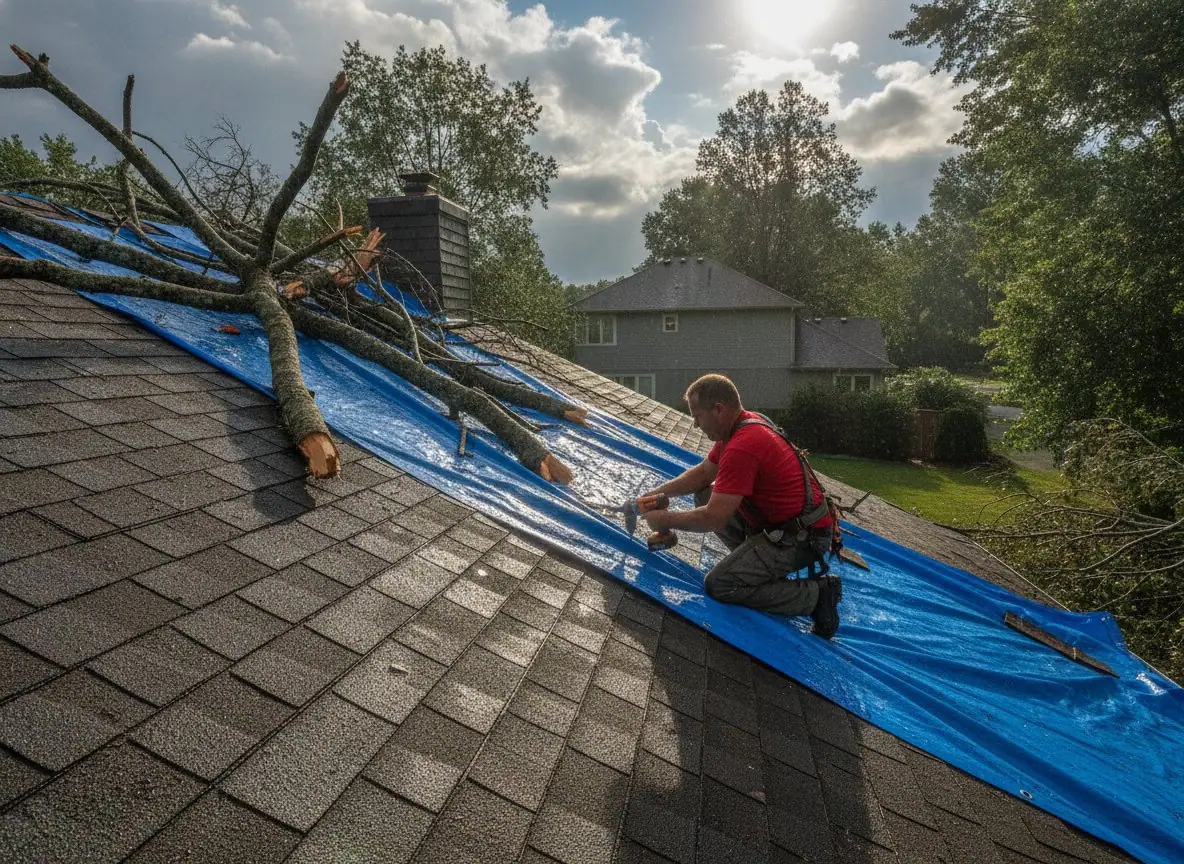
- Emergency Roofing — 24/7 response to active leaks, storm blow-off, fallen trees and any situation that leaves your property exposed to weather.
Each service is described in depth on its own dedicated page; the section below helps you understand how those services map onto the most common roofing systems so you can match your situation to the right option.
At a glance
What are the three main types of roofing?
The three main types of roofing systems are sloped (pitched) roofing, low-slope roofing and flat roofing — and each uses a different set of materials and installation methods.
| Type | Typical pitch | Common materials | Typical application |
|---|---|---|---|
| Sloped / Pitched | 4:12 and steeper | Asphalt shingles, architectural shingles, metal panels, wood shake, slate, synthetic composite | Residential homes, steep-roof additions |
| Low-slope | 2:12 to 4:12 | TPO, EPDM, modified bitumen, built-up roofing (BUR) | Commercial buildings, low-pitch residential sections |
| Flat | Under 2:12 | TPO, EPDM, PVC membrane, BUR | Commercial and industrial structures, modern residential designs |
Indianapolis's older housing stock — particularly the mid-century ranch homes common in the Nora corridor and the Craftsman bungalows near Meridian Hills — almost always has a sloped roof with asphalt shingles. Newer construction in Carmel and Fishers more frequently features architectural (dimensional) shingles or standing-seam metal. Understanding which system is on your building is the first step toward knowing what material makes the best replacement or repair target — which leads directly to the question of which type is best for your situation.
Free, no-obligation estimates
Talk to Nora Roofing Pros
Tell us what you need and we’ll take it from there.
What type of roofing is best?
The best roofing type for most Indianapolis residential properties is a high-quality architectural asphalt shingle, because it balances durability, weight compatibility with typical local framing, storm resistance and cost more effectively than alternatives for the majority of homes here.
That said, "best" depends on four factors specific to your building:
- Roof pitch. Steep roofs drain fast and can carry many material options. Low-slope sections require a waterproof membrane — asphalt shingles will fail on a pitch below 2:12 without special low-slope modifications.
- Structural load capacity. Slate and clay tile are heavier than a typical Indianapolis post-war ranch was engineered to carry. A structural assessment is needed before installing heavy materials.
- Climate exposure. Indianapolis receives frequent hail from spring and summer thunderstorms. Impact-resistant shingles rated Class 3 or Class 4 reduce storm damage claims and may qualify for insurance discounts — worth confirming with your insurer.
- Building use. Commercial flat roofs perform best with single-ply membranes (TPO or EPDM) because they handle ponding water, foot traffic from HVAC maintenance and large surface areas more reliably than shingled systems.
Read moreShow less
Our trained technicians assess pitch, decking condition and structural capacity during a free inspection before recommending any material, so you receive a recommendation based on your actual roof rather than a default answer. Knowing which material fits your building makes it much easier to decide whether you need a repair, a full replacement or simply an inspection to establish a baseline.
At a glance
Do I need a repair, replacement or inspection?
Use the decision rules below: if the damage is localized and the surrounding roofing material is sound, repair is usually the right choice; if more than 25–30% of the surface is compromised or the decking is rotted, replacement is more cost-effective; if you are unsure, start with an inspection.
| Situation | Recommended service | Why |
|---|---|---|
| A few missing or cracked shingles after a storm | Roof Repair | Isolated damage; surrounding material is intact |
| Active interior leak with unknown source | Roof Inspection first, then Repair | Leak origin must be confirmed before repair work begins |
| Roof is 20+ years old and granules are heavy in gutters | Roof Replacement | Widespread material degradation; repair patches will not hold long-term |
| Buying or selling a home in Indianapolis | Roof Inspection | Documents condition for lender, buyer or seller disclosure |
| No known damage but roof is 10–15 years old | Roof Maintenance + Inspection | Catch minor issues before they become major; extend service life |
| Hail strike confirmed by weather service | Roof Inspection (insurance-ready report) | Documents damage for a claim before evidence is lost |
| Large sections of decking are soft or sagging | Roof Replacement | Structural decking failure cannot be patched cost-effectively |
One practical Indianapolis-specific note: the city's freeze-thaw cycle — temperatures that cross the freezing point dozens of times each winter — accelerates flashing failure around chimneys, skylights and valleys. If you see water stains on ceilings after the first winter thaw, the source is often a flashing gap rather than a shingle problem, which is a repair rather than a replacement scenario, and roof repair in Indianapolis covers how that kind of flashing fix is handled. If your situation involves restoring an older roof rather than replacing it outright, the next section explains what that process involves.
What does a roof restoration include?
A roof restoration is a process that extends the life of an existing roofing system without a full tear-off, and it typically includes a thorough inspection, cleaning, structural repairs to decking and flashing, and application of a protective coating or replacement of individual damaged components.
The restoration process we follow:
- Inspection and damage mapping. Every section of the roof is assessed; soft spots, failed seams, compromised flashing and cracked material are identified and documented.
- Surface cleaning. Moss, algae, debris and granule buildup are removed. This step matters because coating or sealing over organic growth traps moisture and accelerates decay.
- Structural repairs. Rotted decking boards are replaced, flashing is re-sealed or replaced, and any damaged fascia or soffits that affect water shedding are corrected.
- Component replacement. Individual shingles, tiles or membrane sections that cannot hold a coating are replaced.
- Protective treatment or coating. On low-slope commercial roofs this often means a reflective elastomeric or silicone coating; on sloped residential roofs it may mean a ridge-vent upgrade and sealant application at penetrations.
- Final inspection and documentation. The completed work is inspected and photographed so you have a condition record going forward.
Read moreShow less
Restoration is not always possible — if decking damage is widespread or the roofing material has lost too much structural integrity, replacement is the more reliable path. Whether your property is residential or commercial also shapes which restoration approach applies, which the next section covers directly.
Do you offer residential and commercial roofing?
Yes — Nora Roofing Pros serves both residential and commercial clients across Indianapolis and the surrounding service area, including properties in Carmel, Fishers, Castleton, Nora, Meridian Hills, Williams Creek, Spring Hill and Clearwater.
Residential roofing covers single-family homes, townhomes and multi-unit residential buildings. The most common Indianapolis residential roofing systems are asphalt shingle (three-tab and architectural), standing-seam metal and, on older homes, wood shake that is now due for replacement. We handle repair, inspection, maintenance, full replacement and new installation on all of these.
Commercial roofing addresses offices, retail buildings, warehouses and industrial facilities. The flat and low-slope roofs common on Indianapolis commercial properties are typically surfaced with TPO (thermoplastic polyolefin), EPDM (synthetic rubber) or modified bitumen. These systems have different inspection intervals, repair methods and performance expectations than residential shingle roofs, and our commercial roofing service is scoped accordingly.
Read moreShow less
If you are unsure whether your property qualifies as commercial or residential for roofing purposes, the structure's use and roof pitch together define it — a residential multi-unit with a steep-slope shingle roof is treated as residential; a flat-roofed mixed-use building is treated as commercial. When you contact us, describe the building type and we will confirm the right service. Whatever the roofing type, some situations require attention before any scheduled appointment — which is where our emergency service becomes critical.
Do you offer 24/7 emergency roofing?
Yes — our emergency roofing service is available 24 hours a day, 7 days a week, including weekends and holidays, to address any situation that leaves your roof open to weather.
Emergency roofing situations in Indianapolis most commonly result from:
- Severe thunderstorm wind that lifts or removes shingles, flashing or sections of membrane
- Hail strikes that puncture roofing material and immediately allow water intrusion
- Fallen tree limbs or branches that breach the decking
- Ice dam formation in winter that forces meltwater under shingles and into wall cavities
- Fire or smoke damage that requires immediate weatherproofing of the affected section
When you call for emergency service, we deploy trained technicians to assess the breach, apply temporary weatherproofing (heavy-duty tarping or emergency sealant as needed) to stop active water intrusion, and document the damage for insurance purposes. Temporary protection is not a permanent repair — a follow-up inspection and full repair or replacement is scheduled once conditions allow safe access. Speed matters: every hour an opening exists, water travels further into decking, insulation and framing, increasing total repair cost and the risk of mold. Understanding cost factors is the natural next step.
At a glance
How much does it typically cost to repair a roof?
Roof repair cost in Indianapolis varies based on several factors specific to the job — no honest contractor can quote a price without first inspecting the roof. After a free inspection, we provide a written quote with a full cost breakdown, and for the broader picture of what drives roofing cost in Indianapolis across repair, replacement and other work, our dedicated pricing page goes into the details.
| Cost factor | How it affects price |
|---|---|
| Roof size (square footage) | Larger surface area means more material and labor hours |
| Roof pitch and access | Steeper pitches require additional safety equipment and slower work pace; low-pitch roofs are faster to work on |
| Roofing material | Basic three-tab shingles cost less than architectural, metal or specialty materials; commercial membranes vary by type |
| Extent of damage | A single damaged section costs less than multiple damaged areas distributed across the roof |
| Decking condition | If the structural decking beneath the surface is rotted or broken, decking boards must be replaced before new material is installed |
| Tear-off requirement | Removing existing layers before installing new material adds labor and disposal cost |
| Permits | Indianapolis and Marion County may require permits for replacement work; permit fees vary by project scope |
| Flashing and accessories | Replacing flashing, ridge vents, pipe boots or gutters alongside the roof work adds material and labor |
Call (317) 659-6376 to schedule a free inspection and receive a written quote with no obligation. The next section explains the two most common ways Indianapolis homeowners and businesses pay for roofing work.
How to pay roofers: insurance claims and financing
Most Indianapolis property owners pay for major roofing work through one of two paths: a homeowner's or commercial insurance claim, or a financing plan — and both options are available when you work with Nora Roofing Pros.
Insurance claims. Indiana experiences frequent hail and wind events that qualify as covered perils under standard homeowner policies. We help you navigate the insurance process by:
- Documenting damage with photos and a written inspection report formatted for adjuster review
- Identifying all storm-related damage so nothing is missed in the initial claim
- Being present during the adjuster visit to walk through findings
- Supplementing the claim if additional damage is discovered during the repair or replacement
Read moreShow less
Financing. When an insurance claim does not apply — routine replacement, maintenance, or elective upgrades — financing options are available so you do not have to delay necessary work. Ask about current financing plans when you call for your free inspection.
One point that is frequently overlooked: Indiana's 180-day storm claim window (the period after a storm event during which you can file) means many homeowners wait too long and lose coverage eligibility. If a significant storm has affected your area, schedule an inspection promptly so any damage is documented while the claim window is open. Knowing how to pay is closely connected to choosing the right contractor to do the work — the final service-selection section addresses exactly that.
How do I choose a roofing contractor in Indianapolis?
Choose a roofing contractor in Indianapolis by verifying that they carry insurance, serve your specific area, offer a written quote after a physical inspection, and provide clear documentation for insurance claims — then compare those basics before price.
Practical checklist when evaluating contractors:
- Confirm they are insured and bonded. An uninsured contractor leaves you liable for on-site injuries. Ask for proof of general liability and workers' compensation coverage before work begins.
- Verify local presence. Contractors based in Indianapolis know Marion County permit requirements, local building codes and the specific weather patterns that drive damage here — storm chasers who arrive after major events often do not.
- Require a written, itemized estimate. Any quote that arrives without a line-by-line breakdown of materials, labor and disposal should prompt additional questions.
- Ask how they handle permits. Indianapolis requires permits for roof replacement work in many situations. A contractor who says permits are unnecessary for a full replacement is a warning sign.
- Check reviews independently. Read the contractor's Google reviews directly rather than relying on testimonials placed on their own website.
- Understand the warranty structure. Ask what the contractor warrants for their own labor separate from the material manufacturer's warranty.
- Avoid large upfront deposits. A deposit is normal; paying the full amount before work begins is not standard practice.
Read moreShow less
Nora Roofing Pros is insured and bonded, provides written quotes after every free inspection, pulls required permits, and helps you through the insurance claim process from first contact through completed repair. We serve Indianapolis and the communities of Clearwater, Meridian Hills, Spring Hill, Williams Creek, Nora, Castleton, Carmel and Fishers.
FAQ
FAQ
How much does a roof replacement cost in Indianapolis?
Roof replacement cost in Indianapolis depends on the size of the roof, the pitch, the material chosen, whether a tear-off is required, the condition of the decking and any permit fees. We do not publish a price range because the spread between a small ranch with three-tab shingles and a large home with metal roofing is wide enough that any figure would be misleading. We provide a written, itemized quote at no charge after a free on-site inspection. Call (317) 659-6376 to schedule.
Is $30,000 too much for a roof?
Whether any price is appropriate depends entirely on the size of the roof, the material specified, the scope of work (tear-off, decking replacement, flashings, gutters) and local labor rates in Indianapolis. A large home with a steep pitch, architectural shingles or metal roofing and significant decking replacement can legitimately reach that range. The only way to know whether a quote is fair is to receive at least two written, itemized estimates from local contractors and compare line by line. We provide free estimates so you have a clear basis for comparison.
Do you offer free roof inspections?
Yes. Nora Roofing Pros offers free roof inspections across Indianapolis and all communities in our service area, including Carmel, Fishers, Castleton, Nora, Meridian Hills, Williams Creek, Spring Hill and Clearwater. The inspection covers decking, flashing, gutters, ventilation and roofing material condition. Call (317) 659-6376 to book yours.
How often should a roof be maintained?
Most roofing manufacturers and industry guidance recommend a professional inspection at least once a year — typically in autumn before winter ice loads — and after any significant storm event. Indianapolis's freeze-thaw climate and spring hail season make twice-yearly inspections (spring and fall) a sound practice for most properties. Regular maintenance catches small issues such as cracked sealant at penetrations, clogged gutters or minor flashing movement before they become interior leaks.
Do you work in the suburbs around Indianapolis?
Yes. In addition to Indianapolis proper, Nora Roofing Pros serves Clearwater, Meridian Hills, Spring Hill, Williams Creek, Nora, Castleton, Carmel and Fishers. If you are in one of these communities and need a repair, inspection, replacement or any other roofing service, call (317) 659-6376 for a free estimate.
Ready to get started? Call Nora Roofing Pros at (317) 659-6376 to schedule your free roof inspection in Indianapolis or anywhere in our service area. Our trained technicians will assess your roofing system, document any damage and provide a written quote — at no cost and with no obligation.
Why choose us
Why choose Nora Roofing Pros?
Free estimates
Get a clear, no-obligation estimate before any work begins.
Licensed & insured
Your property and our crew are protected on every project.
Residential & commercial
One team for homes, multi-family and commercial properties.
Locally owned & operated
A local team serving your community and the surrounding area.
Get in touch
Find roofing help near you
Request a free estimate online or give us a call — our team will follow up quickly.
- Call us(317) 659-6376
- VisitIndianapolis, IN
- HoursMonday-Sunday: 7 AM - 7 PM