Roof replacement in Indianapolis is one of the most significant home improvement decisions a homeowner will make, and getting the details right protects your house through Indiana's full range of weather — from summer hailstorms to freeze-thaw cycles that stress shingles every winter. Nora Roofing Pros is a roofing company serving Indianapolis and surrounding communities including Carmel, Fishers, Castleton, Nora, Williams Creek, Meridian Hills, Spring Hill, and Clearwater. We provide free inspections and written estimates so you know exactly what a full roof replacement involves before any work begins.
What does a roof replacement include?
A complete roof replacement removes every layer of existing roofing material down to the deck, then installs new underlayment, flashing, and roofing material from scratch. This is different from a repair, which addresses isolated damage, or a reroof, which lays new shingles over existing ones. A full replacement gives you a clean start: the deck is inspected and any rotted or weakened sheathing is replaced, all metal flashings around chimneys, vents, and valleys are renewed, drip edge is installed or updated, and the new roofing material is applied to manufacturer specifications.
Beyond the roofing layers themselves, our replacement process includes attic ventilation evaluation. Indianapolis homes — especially the mid-century ranch and two-story colonials common in Nora, Castleton, and Meridian Hills — often have ventilation systems that fall short of current standards. Poor attic airflow shortens shingle life and drives up heating and cooling bills, so we check intake and exhaust balance as part of every replacement project. We also inspect the attic for insulation gaps that allow heat to escape and cause ice damming along the eaves in winter. To see how this work fits into the overall budget for a new roof, review our Indianapolis roofing costs.
Understanding what a replacement includes helps you decide whether replacement is right for your roof's age and condition — which is exactly what the next section addresses.
Should a 20 year old roof replace?
A 20-year-old asphalt shingle roof in Indianapolis is approaching or past the practical end of its reliable service life and should be evaluated seriously for replacement. Standard three-tab shingles are rated for 20–25 years under ideal conditions; architectural (dimensional) shingles are rated for 25–30 years. Indiana's climate accelerates aging: summer UV exposure degrades shingle granules, hailstorms create hidden impact damage, and repeated freeze-thaw cycles lift and crack shingles over time.
The practical decision rule is this: if a roof is older than 20 years and requires repairs costing more than 25–30 percent of the replacement cost, replacement is almost always the better investment. Continuing to repair an aging roof adds labor cost without extending the system's overall life. If the roof is 20 years old but was installed correctly, ventilated properly, and shows no active leaks or significant granule loss, an inspection can confirm whether a few more years of service are realistic. We provide free inspections precisely to give you an honest, documented answer rather than a guess.
Age alone does not tell the whole story — the visible and hidden condition of the roof matters just as much, which brings us to the specific warning signs that indicate you need a new roof.
Free, no-obligation estimates
Talk to Nora Roofing Pros
Tell us what you need and we’ll take it from there.
What are the signs you need a new roof?
Several clear indicators signal that a roof has reached the point where replacement is necessary rather than optional.
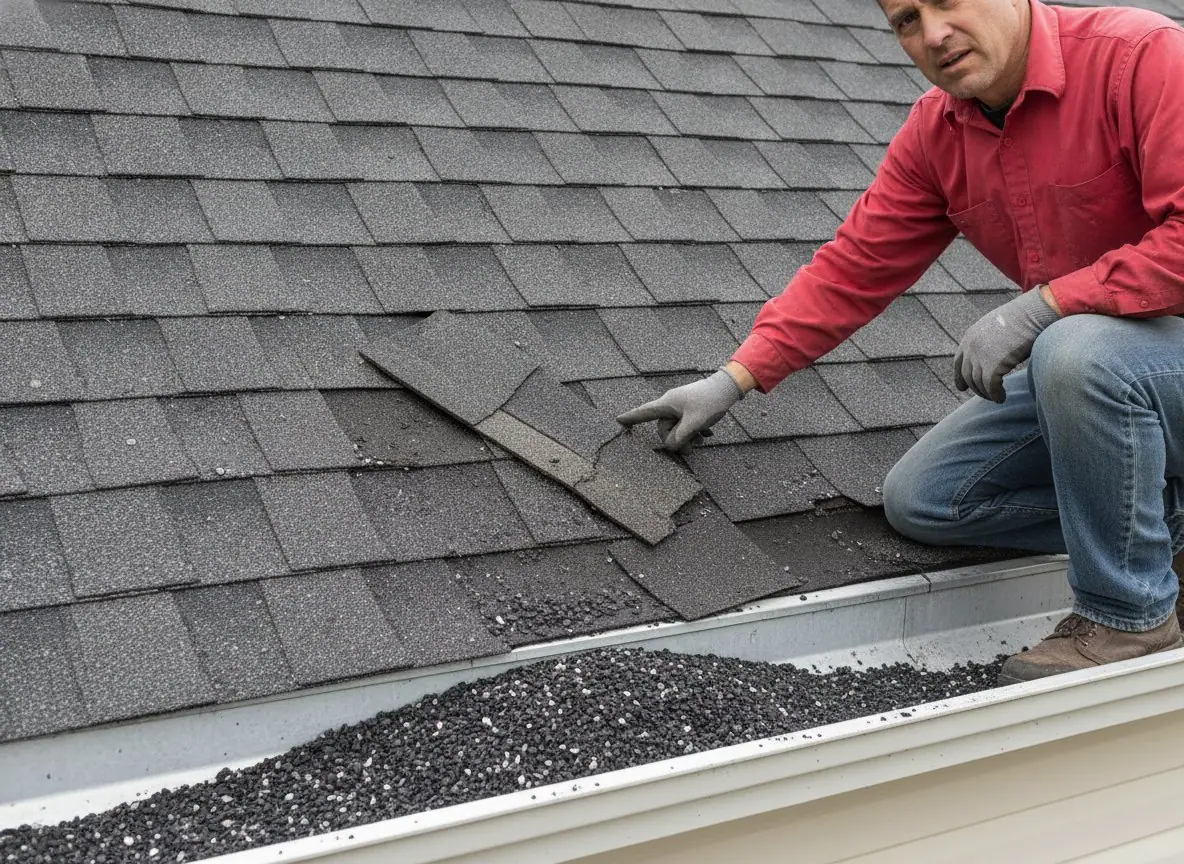
- Granule loss in gutters or downspouts: Heavy granule shedding means the shingle surface is breaking down and no longer reflects UV or sheds water effectively.
- Curling, cupping, or buckling shingles: Shingles that lift at the edges or cup in the center have lost flexibility and are vulnerable to wind uplift.
- Cracked or missing shingles across multiple roof sections: Isolated missing shingles can be repaired; widespread cracking indicates systemic failure.
- Daylight visible in the attic: Light penetrating the roof deck means the decking and roofing layers have failed and water intrusion is imminent or already occurring.
- Water stains on ceilings or interior walls: Active leaks that cannot be traced to a single flashing failure usually indicate widespread membrane breakdown.
- Sagging roof sections: Any visible sag points to compromised decking or structural framing and requires immediate professional evaluation.
- Moss or algae growth covering large areas: Organic growth retains moisture against the shingle surface, accelerating deterioration — common on north-facing slopes in shaded Indianapolis neighborhoods.
- Roof age over 20 years with no prior replacement: Even a visually intact roof of this age should be inspected annually and replaced proactively before failure causes interior damage.
- Flashing failures around chimneys, skylights, or vents: Repeated flashing repairs on an aging roof indicate the entire system is nearing the end of its life.
Once you have identified the need to replace, the next practical question is which material to choose — and cost is a major factor in that decision.
At a glance
Is it cheaper to put a metal roof or shingles?
Asphalt shingles carry a lower upfront installation cost than metal roofing in almost every market, including Indianapolis. Metal roofing typically costs two to four times more to install than architectural asphalt shingles on the same house. However, metal roofs last 40–70 years compared to 25–30 years for quality asphalt shingles, so the lifetime cost per year of protection can favor metal on homes where the owner plans a long tenure.
| Material | Typical Lifespan | Relative Upfront Cost | Key Advantages | Key Limitations |
|---|---|---|---|---|
| Architectural Asphalt Shingles | 25–30 years | Lowest | Wide color range, easiest repair, widely available | Shorter lifespan, granule loss over time |
| Metal (Standing Seam or Panels) | 40–70 years | High | Hail and wind resistant, energy-efficient, low maintenance | Higher upfront cost, expansion noise, specialty repairs |
| Impact-Resistant Asphalt Shingles | 30–40 years | Moderate | Class 4 impact rating, potential insurance discount in Indiana | Heavier than standard shingles |
| Synthetic (Polymer/Composite) | 30–50 years | Moderate-High | Lightweight, impact-resistant, mimics slate or wood look | Fewer contractors experienced with installation |
| Cedar Wood Shake | 20–30 years | Moderate-High | Natural aesthetic, good insulation value | High maintenance, fire risk, not ideal for high humidity |
For Indianapolis homeowners specifically, impact-resistant asphalt shingles are worth considering: Indiana ranks among the states with high hail frequency, and some insurers offer premium discounts for Class 4 rated products. A fortified roof designation — earned by meeting Insurance Institute for Business and Home Safety standards — can also qualify homes for insurer incentives. We walk through material options during the free estimate so you can compare long-term value, not just today's price, before deciding how to replace your roof.
Knowing what material you want is only part of the picture — understanding the replacement process step by step helps you plan for the project itself.
How is a roof replaced, step by step?
A residential roof replacement follows a consistent sequence that protects your home at every stage.
- Free inspection and estimate: We examine the roof surface, flashing, gutters, decking from the attic, and ventilation. We document damage, measure the roof area, and provide a written scope of work and cost estimate.
- Material selection and scheduling: You choose your roofing material and color. We order materials and confirm the project date. Indianapolis requires a building permit for full roof replacements in most cases; we handle permit coordination.
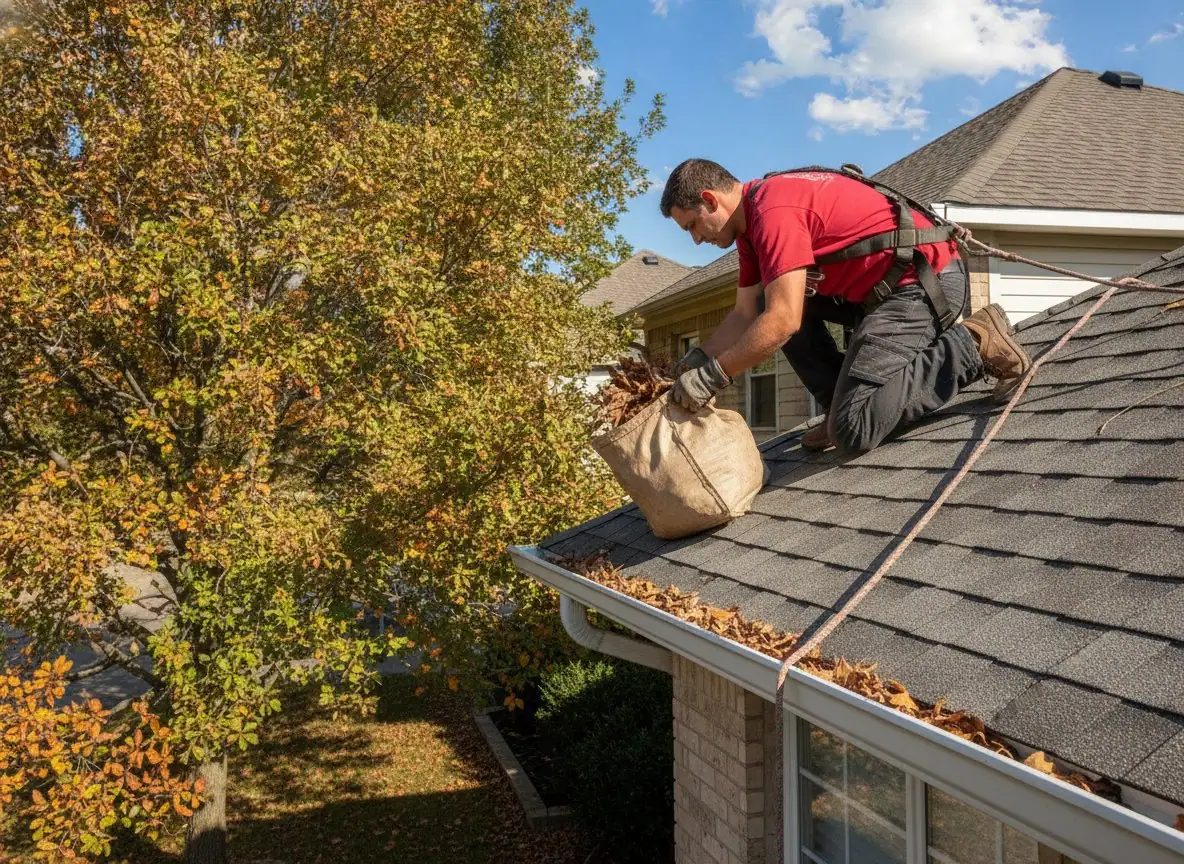
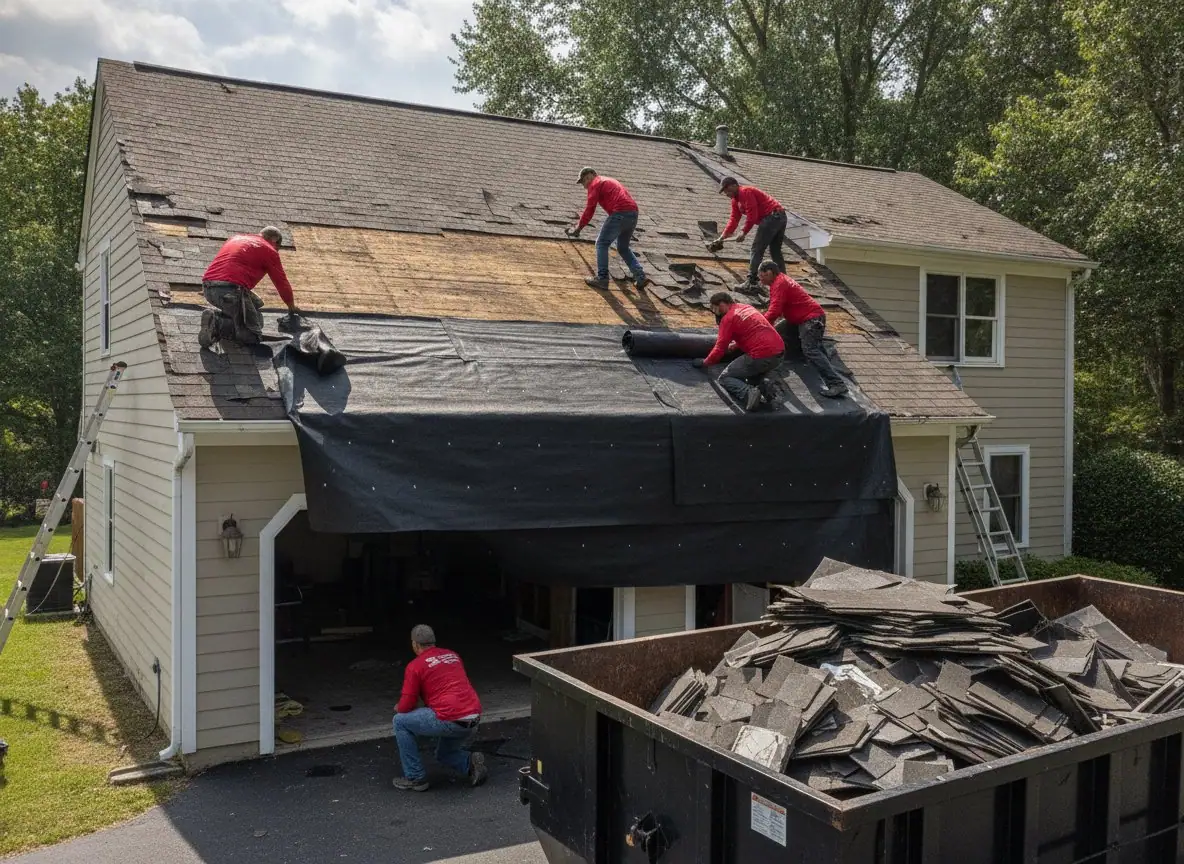
- Tear-off: Our crew removes all existing roofing material — shingles, underlayment, and old flashings — down to the bare deck. Tear-off debris is loaded directly into a dumpster placed in the driveway to protect landscaping.
- Deck inspection and repair: Every square foot of decking is inspected for rot, delamination, or damage. Compromised sheathing panels are replaced before anything goes on top — skipping this step is the most common cause of premature roof failure.
- Underlayment installation: A synthetic or felt underlayment is fastened across the entire deck surface, providing a secondary moisture barrier if the top layer is ever breached.
- Drip edge and flashing: New metal drip edge is installed along all eaves and rakes. Step flashing, valley flashing, and chimney or vent flashing are set before shingles reach those areas.
- Roofing material installation: Shingles, metal panels, or the chosen material are installed from the eave up, following manufacturer guidelines for fastener pattern and overlap — critical for wind-uplift ratings in an Indiana climate.
- Ridge cap and ventilation: Ridge cap shingles or a ridge vent system is installed at the peak, completing the ventilation circuit between soffit intake vents and the ridge exhaust.
- Cleanup and inspection: We run a magnetic roller across the yard and driveway to collect stray nails, remove all debris, and conduct a final walkthrough with you before we leave the site.
How long each of these steps takes depends on the size and complexity of your roof — and that is what the next section explains.
How long does roof replacement take?
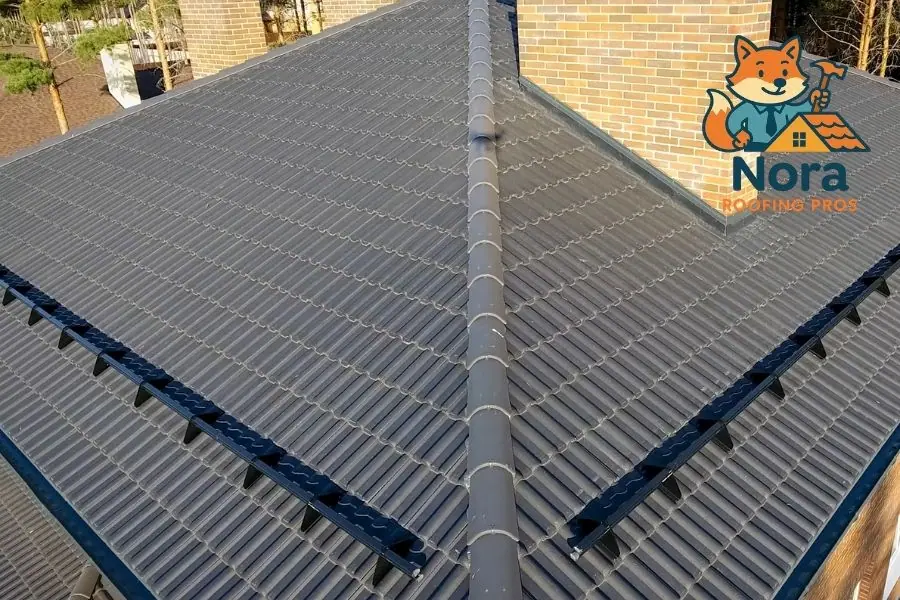
Most residential roof replacements in Indianapolis are completed in one to three days. A straightforward single-story home with a simple gable roof and architectural asphalt shingles is typically done in a single full workday. Larger two-story homes, complex hip or multi-valley rooflines, or projects requiring significant deck repair can extend to two or three days.
Weather affects scheduling. We do not install roofing in rain or when temperatures fall below the threshold recommended by shingle manufacturers (typically 40°F for most asphalt products), because cold installation reduces sealant activation and adhesion. Indianapolis winters make late October through February the most weather-dependent scheduling period. Spring and fall are generally the most predictable windows, though we complete replacements year-round when conditions allow. If a storm has caused active damage, our 24/7 emergency roofing service can deploy temporary protection — tarping and securing the roof — immediately while we schedule the full replacement.
Timeline is closely tied to cost, because larger or more complex projects require more labor and material — which the next section breaks down in detail.
At a glance
How much does roof replacement cost in Indianapolis?
Roof replacement cost in Indianapolis depends on several specific factors, none of which can be quoted accurately without a physical inspection of your home. We provide a written, itemized estimate after a free on-site inspection — no cost and no obligation.
| Cost Factor | Why It Affects Price |
|---|---|
| Roof size (square footage) | Material and labor scale directly with the number of roofing squares (100 sq ft each). |
| Roofing material choice | Asphalt shingles, metal, impact-resistant, or synthetic each carry different material costs. |
| Roof pitch and complexity | Steeper pitches and multiple valleys require more labor and safety equipment. |
| Number of tear-off layers | Indiana code typically limits shingle layers; additional removal adds labor and disposal cost. |
| Decking damage extent | Rotted or damaged sheathing panels are priced per sheet replaced. |
| Flashing requirements | Chimneys, skylights, and multiple penetrations add flashing material and labor. |
| Permit fees | Indianapolis and surrounding jurisdictions charge permit fees that vary by municipality. |
| Access and site conditions | Limited driveway space, landscaping proximity, or height of the structure affects staging time. |
We encourage you to compare written quotes from multiple contractors — a detailed, itemized quote is the only honest basis for cost comparison. Vague "per square" pricing that excludes tear-off, permits, or decking repair will not reflect your actual final cost.
Can you replace garage and shed roofs?
Yes — we replace garage roofs and shed roofs using the same step-by-step process and materials used on the main house. Detached garages and sheds in Indianapolis neighborhoods are exposed to the same hail, wind, and freeze-thaw conditions as the primary structure, so they deteriorate on a similar timeline. A garage roof replacement is a good opportunity to match the new material to the house roof if you are replacing both simultaneously, which can reduce total labor cost.
Smaller structures like garden sheds often use rolled roofing or modified bitumen instead of shingles, which we also install. Permit requirements for accessory structure roofing vary by municipality — some Indianapolis-area jurisdictions require a permit for any roof replacement regardless of structure size, while others have thresholds. We confirm permit requirements for your specific address as part of the estimate process.
Whether the project is a full house, a garage, or a shed, your ability to pay for it on a schedule that works for your budget is an equally important part of the conversation.
Do you help with insurance claims and roof financing?
Yes — Nora Roofing Pros helps Indianapolis homeowners navigate both insurance claims and financing for roof replacement. Many Indianapolis-area roofs sustain storm damage — particularly hail damage — that qualifies for an insurance claim under a standard homeowner's policy. We document damage thoroughly during the inspection, provide a written scope of work that aligns with the insurer's requirements, and are available to meet with the adjuster on-site if needed. We do not make claim decisions for your insurer, but we give you the documentation needed to present a complete and accurate claim.
For projects not covered by insurance, or for out-of-pocket costs such as deductibles, we offer financing options so that an unexpected roof failure does not force you to choose between safety and budget. Financing details are discussed during the estimate appointment.
Choosing the right contractor is the final factor that determines whether all of this — materials, process, insurance, and financing — works out the way it should.
How do I choose a roof replacement contractor in Indianapolis?
Choose a roof replacement contractor in Indianapolis by verifying that the company is insured, provides a written and itemized contract, pulls the required permits, and employs trained technicians who follow manufacturer installation guidelines. Each of these criteria protects you from liability and from voided material warranties.
Specific questions to ask any contractor before signing:
- Are you insured for general liability and workers' compensation in Indiana?
- Will you pull the building permit, or will I be responsible for that?
- Does your quote include full tear-off, permit fees, and decking repair if needed — or are those line items separate?
- Who handles cleanup, and how do you protect my landscaping during tear-off?
- What is your process if additional damage is found once the deck is exposed?
- Can you document damage for an insurance claim if the roof was storm-damaged?
Read moreShow less
Nora Roofing Pros is a roofing company built around transparent estimates and documented process. Beyond replacement, our roofing services in Indianapolis extend to Indianapolis and the surrounding communities of Nora, Castleton, Carmel, Fishers, Williams Creek, Meridian Hills, Spring Hill, and Clearwater. Call (317) 659-6376 to schedule your free inspection and get a written estimate with no obligation.
FAQ
FAQ
What is the cheapest month for roofing?
Late fall and winter — typically November through February — often see lower demand for roofing in Indianapolis, which can mean better contractor availability and occasionally lower material costs. However, cold temperatures limit installation windows for asphalt shingles, so projects scheduled in these months are more weather-dependent. If schedule flexibility matters more than minor cost differences, late summer or early fall offers the best balance of good weather and competitive pricing.
What is the average cost of a 2,000 square foot metal roof?
We do not publish flat-rate averages because the installed cost of a metal roof on a 2,000 sq ft home varies significantly based on roof pitch, panel profile, number of penetrations, tear-off layers, and local permit fees in Indianapolis. A free on-site inspection is the only accurate way to price your specific project. Contact us at (317) 659-6376 to schedule yours.
What is a fortified roof?
A FORTIFIED Roof is a designation created by the Insurance Institute for Business and Home Safety (IBHS) for roofs that are built to exceed standard code requirements for wind and impact resistance. Earning the designation requires specific installation practices, sealed roof decks, and impact-rated materials. Some Indiana insurers offer premium discounts for FORTIFIED-designated homes. Ask us about impact-resistant material options during your estimate appointment, and read more about who we are and how we work.
Can I replace a roof over existing shingles?
Indiana building code generally permits one layer of new shingles over one existing layer, but many roofing professionals and manufacturers recommend full tear-off rather than reroofing over existing shingles. Installing over existing material hides potential deck damage, adds weight to the structure, reduces the ability to install proper underlayment, and can void manufacturer warranties on the new shingles. We evaluate existing conditions during the inspection and explain which approach is appropriate for your specific roof.
Do I need a permit to replace a roof in Indianapolis?
Yes — the City of Indianapolis and most surrounding jurisdictions in Marion and Hamilton counties require a building permit for a full roof replacement. Permit requirements vary slightly by municipality; for example, Carmel and Fishers have their own permitting offices with their own fee schedules. Working without a permit can create problems when you sell the home. Nora Roofing Pros handles permit coordination as part of the replacement project.
What happens if it rains during a roof replacement?
If rain begins while the roof is partially open, our crew stops work and covers the exposed deck with waterproof tarps to prevent moisture intrusion. We monitor forecasts closely before and during each project. Work resumes once conditions allow safe installation and the deck surface has dried adequately. If a sudden storm causes damage before or during a planned replacement, our 24/7 emergency roofing service can respond to tarp and secure the structure until the full replacement is completed.
Why choose us
Why choose Nora Roofing Pros?
Free estimates
Get a clear, no-obligation estimate before any work begins.
Licensed & insured
Your property and our crew are protected on every project.
Residential & commercial
One team for homes, multi-family and commercial properties.
Locally owned & operated
A local team serving your community and the surrounding area.
Get in touch
Find roofing help near you
Request a free estimate online or give us a call — our team will follow up quickly.
- Call us(317) 659-6376
- VisitIndianapolis, IN
- HoursMonday-Sunday: 7 AM - 7 PM